இந்திய விண்வெளித் துறை வழங்கும் படிப்புகள் என்னென்ன? முழு விவரம்
இந த ய வ ண வ ள - The Indian Space Research Organisation (ISRO), operating under the Indian Space Sector, functions alongside several autonomous organizations

Indian Space Sector: Comprehensive Guide to Available Courses
Hindinewslive247.com – இந த ய வ ண வ ள – The Indian Space Research Organisation (ISRO), operating under the Indian Space Sector, functions alongside several autonomous organizations and research centers. These entities pursue four primary objectives that drive India’s space ambitions forward.
Core Programs and Initiatives
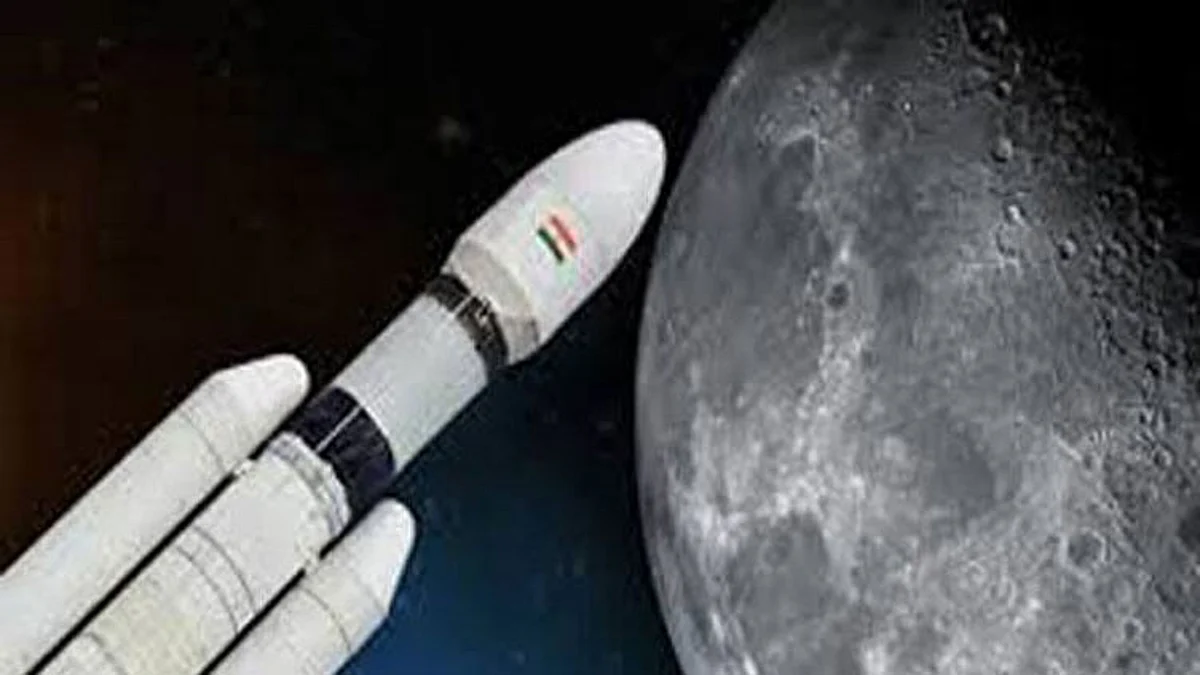
The first major initiative focuses on developing indigenous launch vehicles, specifically the LVM3 and PSLV systems. This program aims to create domestically manufactured rockets capable of carrying payloads into orbit.
The second pillar involves managing satellite communication networks and navigation systems. The INSAT constellation and NaviC system represent key achievements in this domain, providing essential services across the nation.
Earth observation capabilities form the third critical component. Satellite imagery supports weather forecasting, resource monitoring, and disaster management operations throughout the country.
The fourth area encompasses manned and advanced space missions. The Gaganyaan human spaceflight program and space docking experiments represent flagship projects in this category.
Coordination and New Agencies
The Vikram Sarabhai Space Centre (VSSC) and U.R. Rao Satellite Centre (URSC) coordinate these programs to ensure efficient implementation. Additionally, the Indian National Space Promotion and Automation Centre, commonly known as IN-SPACE, operates as a single-window autonomous agency to encourage private sector participation in India’s space industry.
Educational Institutions and Course Offerings
Under the Indian Space Sector, institutions like the Indian Institute of Space Technology (IIST) and the Indian Institute of Remote Sensing (IIRS) offer various programs. These courses enable students to study space-related subjects and conduct necessary research in the field.
First PGD Course: Remote Sensing and GIS
The Post Graduate Diploma in Remote Sensing and GIS features specializations in Agriculture and Soil Sciences. Students must note that once a specialization is selected and allocated, it cannot be changed during the program.
Eligible candidates must hold a Master’s degree in one of the following fields:
M.Sc. in Agriculture, Agri. Physics, Soil Science, Agrometeorology, Entomology, Pathology, Agronomy, Plant Physiology, Horticulture, Agric. Botany, Soil Conservation and Water Management, Climate Change Adaptation, Environmental Science, or equivalent qualifications.
Bachelor’s degree holders with four-year degrees in Agriculture, Horticulture, or Sericulture are also eligible. Additionally, B.E./B.Tech. graduates in Agric. Engineering, Agric. Informatics, or Agric. and Food Engineering qualify for admission. Master’s degree holders in Geography and M.Sc. in Agriculture Analytics are equally eligible.
Second PGD Course: Remote Sensing and GIS
This program offers a specialization in Forest Resources and Ecosystem Analysis. Similar to the first course, students cannot switch specializations once selected and allocated.
Eligible candidates include those with Master’s degrees in Forestry, Ecology, Botany, Wildlife Science, Biosciences, Zoology, Environmental Science, Environmental Management, Natural Resources Management, or Life Sciences.
Bachelor’s degree holders with four-year degrees in Forestry, Biotechnology, Forest-Biotechnology, or Bioinformatics are also eligible for this program.
Selection Process and Age Limit
Admission to both courses is determined through online interviews and academic record evaluation. The maximum age limit for applicants is set at 45 years for both programs.